
Open the visual model ↗
A useful signal with a hard boundary
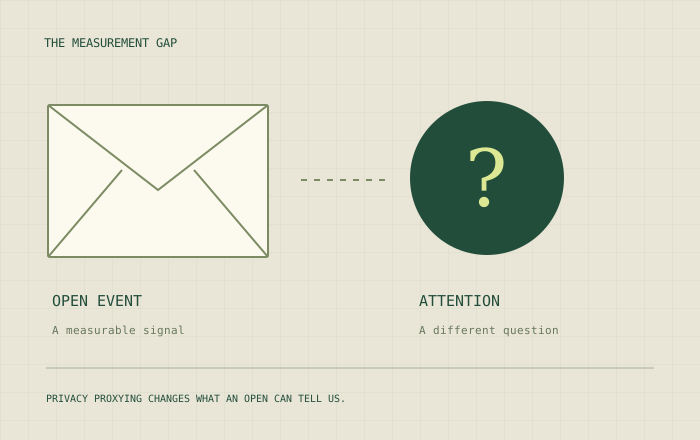
An open can show that an email client recorded an image-related event. It cannot, by itself, show that a person read, understood, trusted, or acted on a message. Apple says its Mail Privacy Protection can download remote content in the background regardless of engagement. That makes a clean equation between unique opens and human attention untenable.
This is not an argument to erase open reporting. It is an argument to name it accurately. A platform event can still help identify delivery anomalies or compare a list's behavior over time when the method stays consistent. It becomes misleading when a sponsor is sold a claim of attention that the metric cannot support.
Measure the promise that was actually sold
A flat-fee placement can be reported against sends and placement delivery. A click-based offer needs a documented click definition, bot filtering, attribution window, exclusions, and owner of record. A conversion offer needs the same discipline further downstream. The billing unit should be written before the send, alongside the remedy if a delivery condition fails.
Newsletter-network documentation itself distinguishes CPM based on unique opens from CPC based on unique clicks, while making the available payout type dependent on the advertiser. That is a useful reminder that a label does not eliminate a risk allocation.
Build a report that admits uncertainty
Our editorial judgment is that a credible sponsor report begins with delivered messages, a defined placement, eligible clicks, unsubscribe and complaint guardrails, and any agreed conversion data. It should describe where privacy systems, blocked tracking, or unavailable downstream data limit the result. That is more valuable than producing a single inflated attention number.
The reader deserves the same care. Frequency, relevance, and clear paid labels matter because email attention is scarce. Better measurement will not repair an offer that exhausts the list; it can only make the tradeoff visible sooner.
Sources & limits
This analysis does not quantify the share of any list affected by privacy proxying or prescribe a universal reporting standard.
- Mail Privacy Protection & Privacy
Platform privacy documentation · Publication date not stated · Referenced in the earlier research pass · 15 September 2026 - Ad Network FAQ
Vendor documentation · Source updated 12 August 2026 · Referenced in the earlier research pass · 15 September 2026
Source claims and editorial judgments remain separate. Send a correction with the passage and supporting evidence.