
Open the visual model ↗
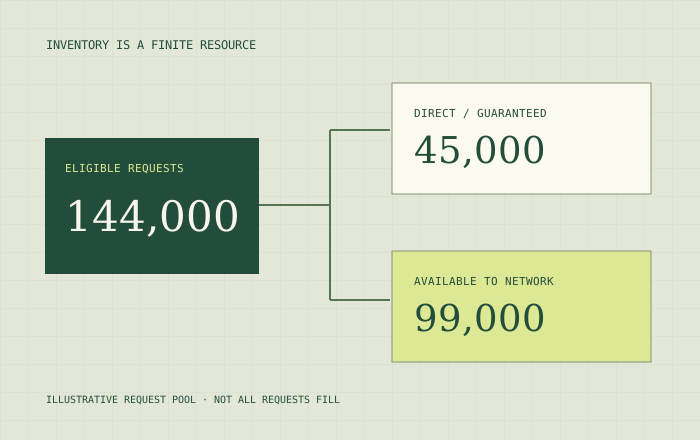
Know which path fills the slot
A direct campaign is an agreement between the publisher and a buyer. The publisher decides which line item may serve, hosts or approves the creative, and reports delivery. A simple fixed sponsorship can run for a period without forecasting a guaranteed impression total. Impression guarantees add pacing, inventory forecasts, underdelivery risk, and makegoods. Non-guaranteed direct inventory fills only when eligible space remains.
Programmatic demand adds intermediaries. A network can provide one managed tag. An SSP offers inventory to exchanges and buying platforms. A waterfall asks sources in sequence; header bidding asks several sources for bids before the ad server chooses. Header bidding may improve competition, but it also adds partner approvals, configuration, consent signaling, timeouts, version changes, and discrepancies. For a small publisher, complexity is a cost that must earn its place.
| Level | What runs | New burden |
|---|---|---|
| Direct only | A few named placements, approved creatives, house fallback | Orders, pacing where promised, reporting, invoicing |
| Managed fill | Direct priority, one programmatic tag, house fallback | Vendor review, consent behavior, reconciliation, quality controls |
| Header bidding | Several demand partners compete before the ad server decision | Adapter maintenance, latency, auction tuning, partner and version QA |
Source notes: Introduction to Header Bidding · Standard Terms and Conditions for Internet Advertising for Media Buys One Year or Less, Version 3.0
Design floors, timeouts, and fallback together
A price floor is only one control in an auction. A high floor can reduce fill; a low floor may accept weak demand. The publisher still needs an outcome when no eligible ad wins or a partner times out. A house ad keeps the layout stable and uses the space for the publisher's own work. Leaving a reserved box blank is acceptable. Collapsing a slot can create layout shift, especially after content has appeared, so collapse only when the page design anticipates it.
Every external call needs a timeout and a recorded outcome. A request that receives no response should become a timeout or no-fill event, not vanish from reporting. Keep direct and programmatic priority rules explicit. A direct campaign that promises a placement should not lose it to an auction merely because a bid arrived; equally, unsold inventory should not block the page while several partners wait.
Source notes: Introduction to Header Bidding · Web Vitals
Make each seller relationship inspectable
Programmatic supply chains use three related transparency mechanisms. A publisher's ads.txt file declares which advertising systems and account identifiers may sell its inventory and whether each relationship is direct or reseller. Each intermediary's sellers.json identifies the organizations behind seller accounts. The SupplyChain object travels with an auction request and lists the seller hops for that transaction. Buyers can compare the three to detect unauthorized or misrepresented inventory.
Treat ads.txt as an operational file, not a one-time setup task. Copy authorized lines from the partner's current instructions, record who approved them, include ownership information where the current specification calls for it, and remove relationships when they end. Monitor the file from outside the site. A publisher does not need to invent seller entries or publish sellers.json merely because it sells its own inventory.
| Mechanism | Published by | Question answered |
|---|---|---|
| ads.txt | Publisher domain | Who may sell this domain's inventory? |
| sellers.json | Advertising system or intermediary | Who is behind this seller account? |
| SupplyChain object | Included in the bid request | Which seller hops handled this opportunity? |
Source notes: Ads.txt — Authorized Digital Sellers
Consent and page performance are launch gates
Contextual selling uses the page and request as inputs; personalized selling uses a persistent profile or identifier. Contextual delivery can reduce data use, but it does not erase privacy obligations. Before any partner tag runs, document which storage, identifiers, signals, and transfers it uses, where consent or an opt-out is required, and what happens when permission is absent. The safe fallback is a first-party contextual or house placement that does not call an ineligible vendor.
Reserve each slot's dimensions in the site's CSS before advertising code runs. Load below-the-fold demand near the viewport, keep bidder calls off the content's critical path, cap the wait for responses, and avoid automatic refresh unless it is expressly permitted and measured only while the page is visible. Test consent granted, denied, unavailable, and changed. Test slow devices and networks, blocked scripts, malformed creatives, no fill, and rollback after a library update.
- No demand partner fires before the applicable choice is known.
- The page remains usable when consent, demand, or measurement fails.
- Creative size, motion, focus, labeling, and landing URL pass review.
- A kill switch disables a partner or creative without a site deployment.
- Performance budgets are measured on representative mobile hardware.
Source notes: Web Vitals · Introduction to Header Bidding
Sources & limits
The guide does not recommend a vendor or assert that any programmatic, consent, or Sprigpost integration exists. Partner requirements and privacy rules must be checked for the actual markets and release date.
Adapted from supplied research. See the evidence and review method. Section source notes identify supporting references; operational suggestions remain editorial judgment.
- Introduction to Header Bidding
Open-source project documentation · Publication date not stated · Primary source checked · 15 September 2026 - Ads.txt — Authorized Digital Sellers
Standards-body documentation · Source updated 14 September 2026 · Primary source checked · 15 September 2026 - Web Vitals
Platform documentation · Publication date not stated · Primary source checked · 15 September 2026 - Standard Terms and Conditions for Internet Advertising for Media Buys One Year or Less, Version 3.0
Industry standard terms · Publication date not stated · Primary source checked · 15 September 2026
Source claims and editorial judgments remain separate. Send a correction with the passage and supporting evidence.