Open the visual model ↗

Draw the path from message to outcome
A newsletter link may pass through the sending platform's tracking redirect, an enterprise security scanner, a browser or privacy service, the publisher's redirect, and the destination. Each layer can produce an event, and some events come from automated systems rather than a person choosing to visit. Draw the path and assign an owner to every redirect and log before comparing totals.
Microsoft documents that Safe Links can rewrite or inspect links as part of email protection. Mailchimp documents bot activity and product-specific filtering. These sources establish that automated traffic exists; they do not provide a universal rule for labeling every click. Preserve raw counts, vendor-filtered counts, and the publisher's classification separately. A security scan should not be called fraud, and a filtered remainder should not be called verified human attention.
| Event | Identifier | Likely denominator |
|---|---|---|
| Delivered message | Send + recipient | Accepted or delivered messages |
| Tracked click | Send + recipient + link | Eligible delivered messages |
| Redirect request | Request + link | Tracked clicks or requests |
| Landing session | Session + campaign | Tracked clickers |
| Outcome | Order/signup + campaign | Landing sessions or qualified clickers |
Source notes: Safe Links in Microsoft Defender for Office 365 · About bot activity
Publish definitions and denominators with the rate
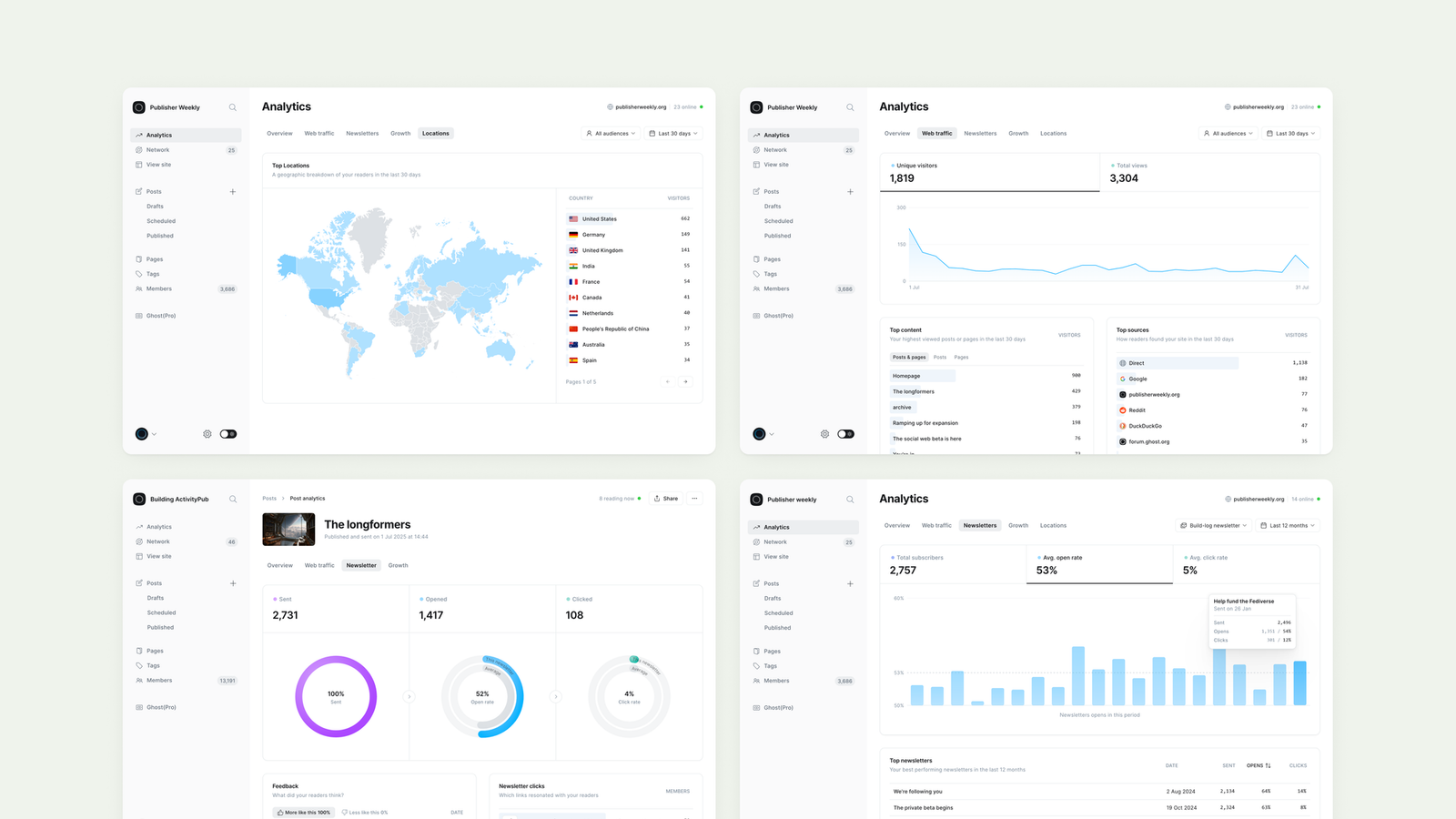
Document whether a platform's click metric counts unique recipients, unique links, all click events, or filtered activity. Ghost, for example, describes a product-specific click rate based on unique members and recipients. Another sender may use a different definition. Export message ID, recipient pseudonymous ID where permitted, link ID, timestamp, user agent or classifier, and redirect destination so the metric can be reproduced within privacy and retention constraints.
Choose labels that say what is known: vendor-reported unique clicker, raw redirect request, classified automation, landing session, engaged session, conversion. Do not subtract two unrelated totals. Differences can arise from blockers, redirect failure, time zones, cookies, consent, cross-device use, or session thresholds as well as automation. Report the unmatched share instead of forcing a perfect funnel.
Source notes: Post analytics
Build a quality cohort with hypothetical arithmetic
Suppose a campaign reaches 10,000 accepted recipients and the sender reports 1,000 unique clickers. Its documented classifier flags 300 as likely automated. The publisher sees 650 campaign-attributed landing sessions and 40 completed signups. Report each layer: 10% vendor-reported unique click rate, 700 clickers remaining after the vendor classification, 650 observed landing sessions, and 40 signups. Do not state that 700 people clicked; it is a filtered estimate.
The numerical difference between 700 filtered clickers and 650 sessions is not 50 missing people or events: the systems count different units and may not share a reconciled key. Review redirect errors, consent, attribution windows, duplicate devices, and campaign-tag consistency without subtracting the totals as a funnel loss. For sponsors, disclose the definitions agreed in the order and avoid replacing a contracted delivery measure after the campaign. For editorial learning, compare link position, promise-to-landing-page match, and downstream completion using stable cohorts.
| Layer | Count | Bounded interpretation |
|---|---|---|
| Accepted recipients | 10,000 | Send denominator |
| Reported unique clickers | 1,000 | Vendor-defined |
| Likely automated classification | 300 | Vendor/model-defined |
| Landing sessions | 650 | Publisher analytics definition |
| Completed signups | 40 | Publisher outcome definition |
Hypothetical values; classifications are not proof of human identity.
Source notes: About bot activity
Operate redirects and anomalies as publication infrastructure
Keep a link registry with canonical destination, campaign parameters, owner, sponsor or editorial purpose, launch time, and expiry. Monitor redirect latency, errors, loops, destination changes, and unexpected bursts by network or user agent. Preserve the original link definition when fixing a destination so historical reporting remains interpretable. If a platform resets or changes counts after a link update, annotate the break rather than splicing periods.
Set an anomaly review playbook: preserve logs, confirm vendor definitions, isolate affected campaigns, inspect landing analytics, and issue a corrected report if the agreed metric changes materially. Retain only the data needed under the site's policy. The goal is a defensible chain from delivered message to downstream action, with automation and missing joins visible—not a synthetic human-click number.
- Name every redirect and tracking owner.
- Archive the sender's metric definition for the campaign.
- Keep raw, vendor-filtered, and publisher-observed layers separate.
- Test links before send and monitor destination errors.
- Annotate classifier, redirect, and analytics changes.
Source notes: Safe Links in Microsoft Defender for Office 365
Continue the work
Sources & limits
Bot and session classifications are vendor- and method-dependent. They estimate event quality and do not verify an individual reader's intent.
- About bot activity
Mailchimp documentation · Publication date not stated · Primary source checked · 19 September 2026 - Safe Links in Microsoft Defender for Office 365
Microsoft documentation · Publication date not stated · Primary source checked · 19 September 2026 - Post analytics
Ghost documentation · Publication date not stated · Primary source checked · 19 September 2026
Source claims and editorial judgments remain separate. Send a correction with the passage and supporting evidence.