
Open the visual model ↗
Start with the asset, not the menu
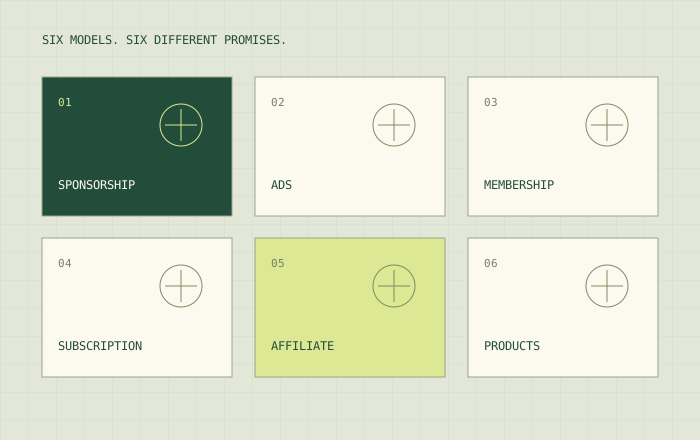
Revenue models are different businesses. A sponsor pays for defined exposure or association; an affiliate merchant pays for an attributed action; a subscriber pays for continuing access; a member may be paying for participation and identity as well as benefits. The first question is not which widget is available. It is what value a real payer can already verify.
Specific business access may support one fixed direct offer. A recurring reader habit and distinct ongoing value may support a subscription test. Participation capacity may support membership. Purchase-comparison intent may support disclosed affiliate work. Proprietary research or teachable expertise may support a report or workshop before a more demanding product is built.
Check the work behind the offer
Before accepting money, define the promise, measurement dictionary, cost boundary, rights, disclosure, collection terms, and refund or makegood path. A direct sponsor offer also needs inventory forecasting, sales capacity, creative review, reporting, invoicing, and collections. Reader revenue requires billing, support, retention work, and a credible answer to why the product remains valuable next month.
Programmatic revenue also has prerequisites. Vendor eligibility can involve quality, geography, content, setup, and other factors beyond audience volume. Consent, user experience, ad quality, seller declarations, and cash timing remain operating questions after integration.
- Name the payer, the unit, the count owner, and the delivery remedy.
- Track gross revenue, deductions, incremental cash cost, valued labor, and collection timing separately.
- Keep sponsored, affiliate, and editorial material distinguishable to readers.
Run one bounded pilot
Set a written time and cash budget, a stop rule, and a short review period. After delivery, ask whether the offer produced positive contribution after the named costs and labor, preserved trust and user experience, was collected, and showed evidence of repeat demand. Unknowns should remain unknown rather than being entered as zeros in the model.
Diversification can reduce concentration, but it is not a requirement to imitate. The next stream should either reduce a specific dependency or reuse an existing asset and workflow. That keeps a new publisher from turning unproven revenue ideas into permanent operating obligations.
Sources & limits
This guide is educational; entity, tax, consumer, privacy, contract, and platform requirements need current jurisdiction-specific review before implementation.
- Reader Revenue Playbook
Industry playbook · Publication date not stated · Referenced in the earlier research pass · 15 September 2026 - How do we choose the engagement and revenue model for us?
Field guide · Publication date not stated · Referenced in the earlier research pass · 15 September 2026 - Who is eligible for Raptive?
Vendor eligibility documentation · Source updated 5 June 2026 · Referenced in the earlier research pass · 15 September 2026
Source claims and editorial judgments remain separate. Send a correction with the passage and supporting evidence.