
Open the visual model ↗
The appeal of another line
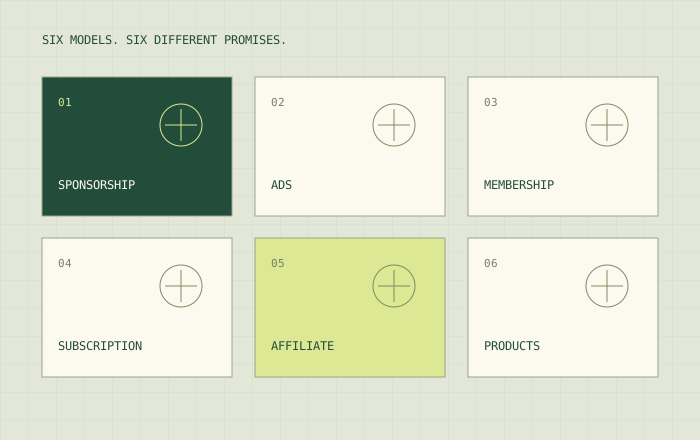
A hybrid model is attractive because it appears to spread risk: a sponsor supports one placement, a network earns from unsold impressions, readers contribute, and perhaps a report or course adds a deeper product. That picture is incomplete. Each line comes with a payer, a delivery promise, a way to measure it, and a different moment when cash may arrive.
The Institute for Nonprofit News reported that 49% of the covered outlets in its 2026 Index used at least four revenue streams. The revenue data describe calendar 2025, with 397 outlets in the revenue analysis. That is evidence from one nonprofit-news cohort, not proof that four streams maximize profit or a blueprint for a commercial niche publication.
The hidden operating stack
Direct sponsorship means prospecting, contracts, creative review, pacing, reporting, invoicing, collection, and sometimes makegoods. Affiliate work means disclosures, link maintenance, attribution windows, reversals, and payment reconciliation. Reader revenue adds billing, support, retention, refunds, and an ongoing obligation to deliver value. Programmatic inventory still requires consent, quality checks, seller declarations, and reconciliation.
Our editorial view is that a small publisher should count this work before celebrating a diversified revenue chart. A stream that earns a little gross revenue while absorbing a founder's week may be less resilient than a simpler model with a known contribution and a protected editorial cadence.
Add the next thing only when it reuses a real asset
The sensible order follows the asset already proven: trusted niche access may justify one bounded sponsor offer; a recurring reader habit may justify a reader-revenue test; demonstrated purchase intent may justify a disclosed affiliate test. A high-volume site may evaluate network fill, but only after its actual gates, consent, experience, and economics are known.
The operational test is plain: did the pilot preserve trust and user experience, produce positive contribution after named costs and labor, get paid, and show repeat demand? If not, a second widget is not diversification. It is a second unfinished job.
Sources & limits
This is an editorial judgment using a nonprofit-news cohort and product documentation; it does not rank models or establish results for a particular publisher.
- 2026 INN Index archive
Original survey analysis · Source published 9 June 2026 · Referenced in the earlier research pass · 15 September 2026 - 2026 Index Methods & Definitions
Original survey methodology · Source published 9 June 2026 · Referenced in the earlier research pass · 15 September 2026 - 2024 Index: Revenue & Expenses
Original survey analysis · Publication date not stated · Referenced in the earlier research pass · 15 September 2026 - Payment timelines for AdSense
First-party product documentation · Publication date not stated · Referenced in the earlier research pass · 15 September 2026
Source claims and editorial judgments remain separate. Send a correction with the passage and supporting evidence.