The dated product change
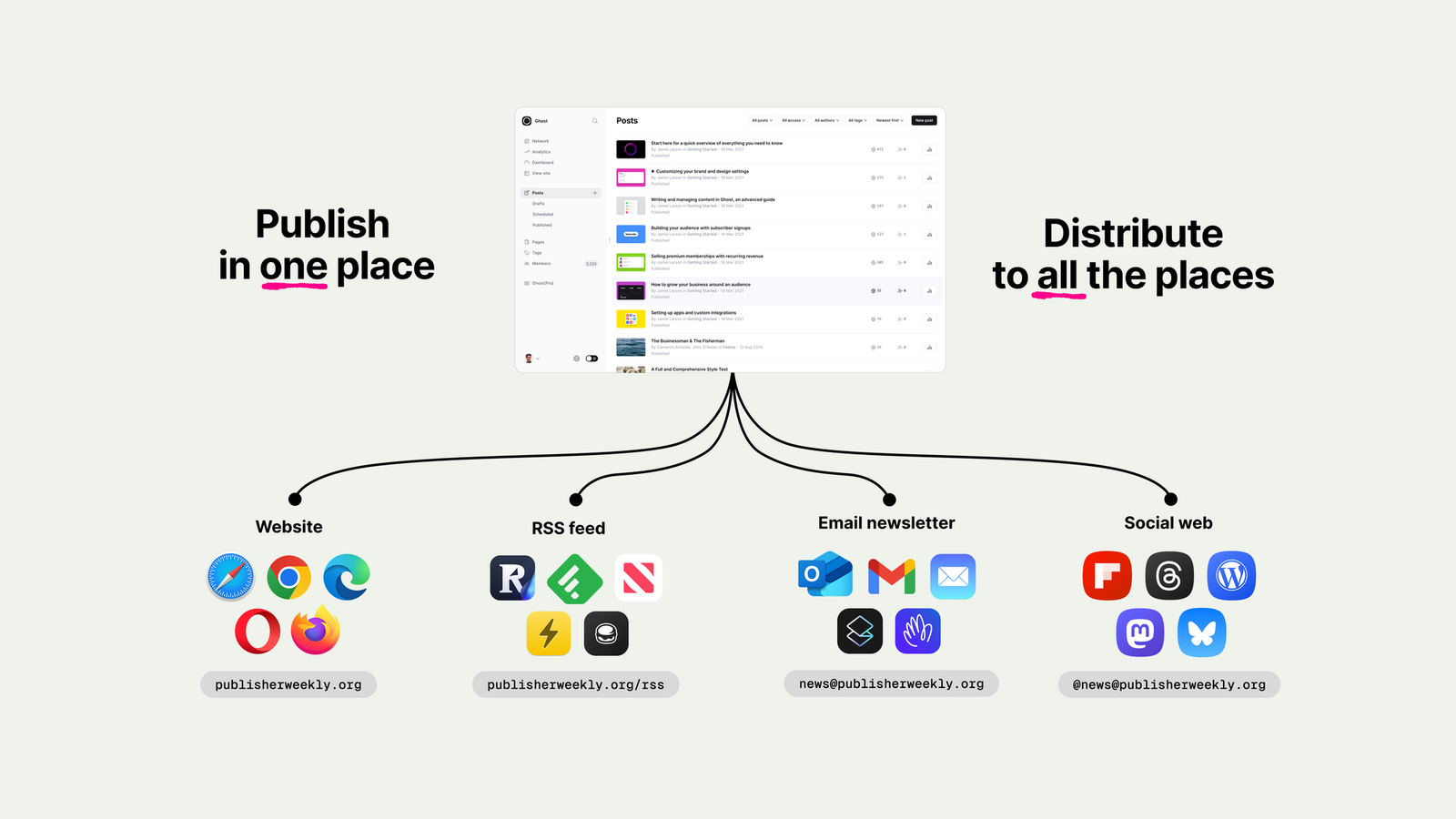
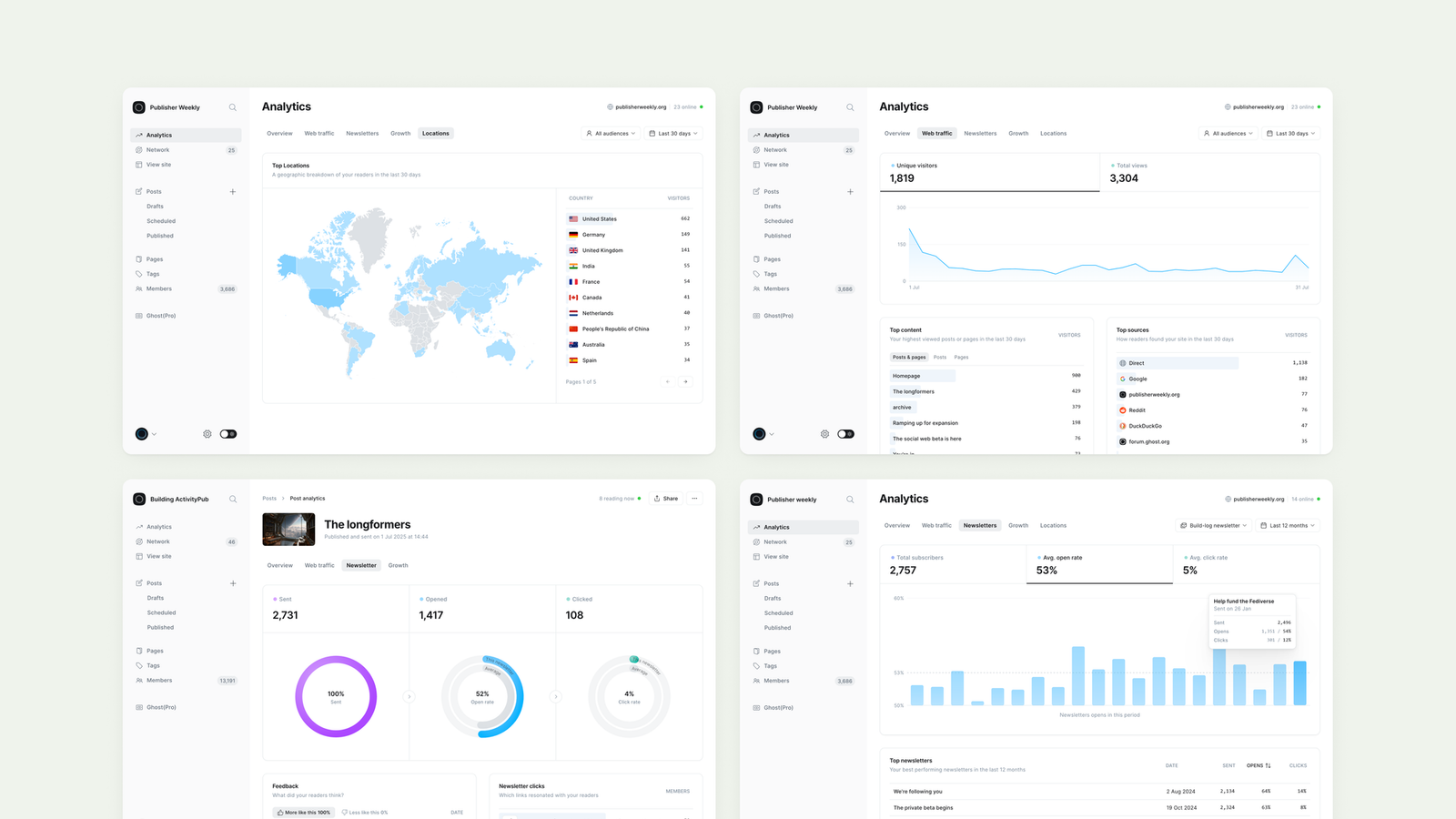
Ghost published version 6.0 on 4 August 2025. Its release page introduced a social-web distribution channel: people could discover, follow, like and reply to Ghost posts through supported ActivityPub-connected services. The same release said Ghost had added native analytics covering web traffic, newsletters and member subscriptions. Ghost described the social integration as available on 6.0 sites whether hosted through Ghost(Pro) or self-hosted.
That is a product-release record, not a reach study. The page names possible interactions and connected services, but it does not establish how many people followed a particular publication, which interaction became a subscription, or whether a federation action had commercial value. Those outcomes still depend on a publication, its audience, client behavior, and measurement choices.
Source notes: Ghost 6.0
A new route needs its own ledger
The practical change was that a publisher could treat federation as a distinct discovery route instead of folding it into a vague social total. Start with a simple path: a public post, a visible follow or reply, a visit, a voluntary email signup, and a later paid action. Each step needs a named event and denominator. A reply can indicate conversation without indicating a visit; a new follower can be valuable without being a subscriber.
Keep the route separate from email, search and direct traffic during a test. Record the publication date, the post type, the client or referrer where known, and what the analytics system can and cannot attribute. This is especially useful where activity travels through more than one service. A dashboard total may be convenient while still hiding the event path needed to evaluate editorial effort.
What the release cannot settle
Ghost also positioned its new analytics as first-party and cookie-free. That product description does not make every comparison automatically valid. A publisher still has to document what counts as a visit, member, subscription, click or interaction in the report it uses. A metric definition can change even when a headline number looks continuous.
The better historical question is: which audience relationship did the new channel make observable, and which business decision would that observation inform? Use a short, dated trial with a content and staffing cost. Compare outcomes with a clearly stated baseline. Do not credit a platform release for revenue that the publisher has not measured.
From the original source
Look at the actual material.
Open the image for a closer view. Platform examples document the interface at the source date; they do not establish earnings or outcomes for this publication.
Sources & limits
This entry documents Ghost's release description. It does not establish current feature availability, analytics definitions, federation reach, or results for a particular publication.
- Ghost 6.0
Ghost product release · Source published 4 August 2025 · Primary source checked · 16 September 2026
Source claims and editorial judgments remain separate. Send a correction with the passage and supporting evidence.