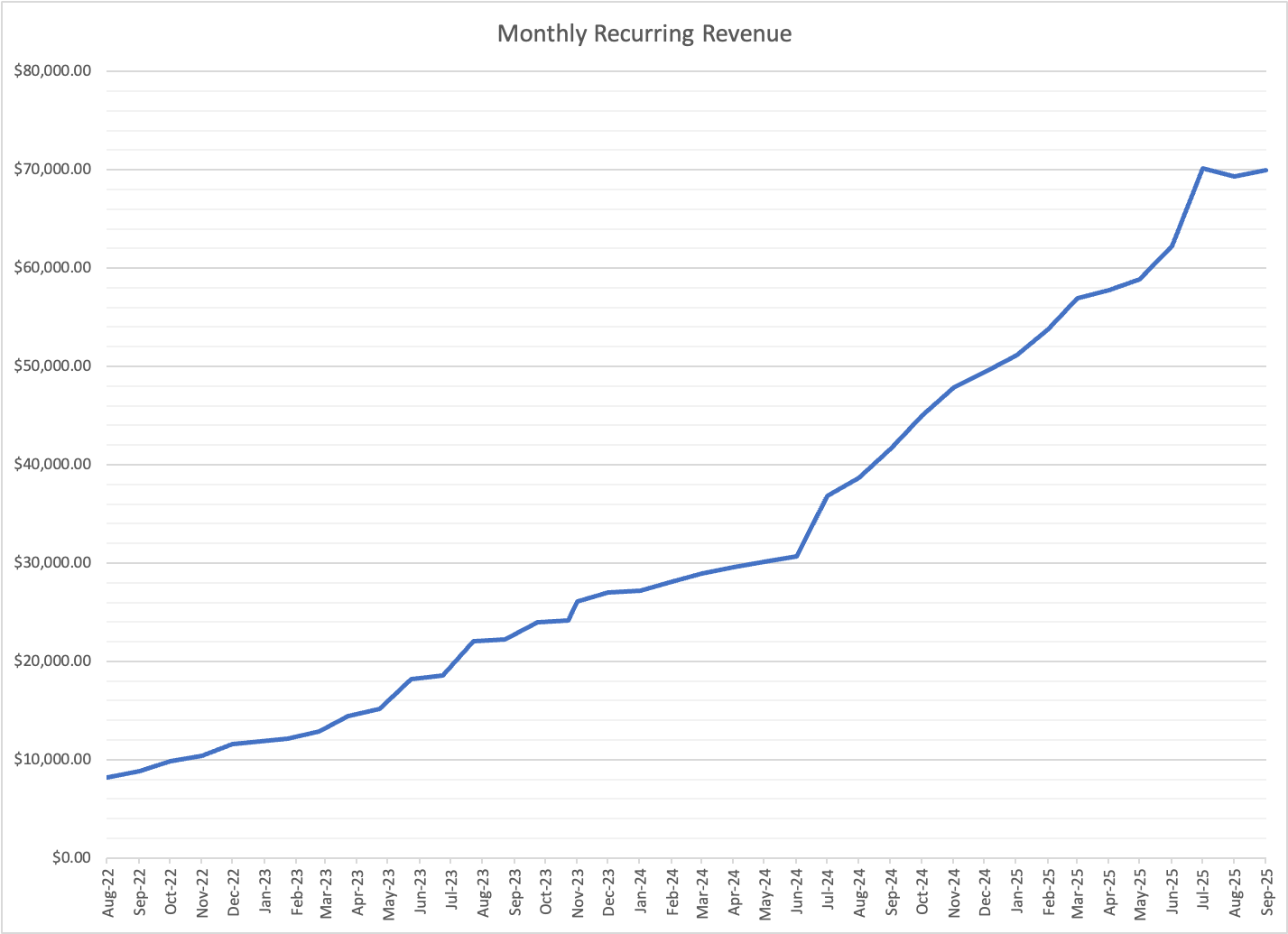
Open the visual model ↗
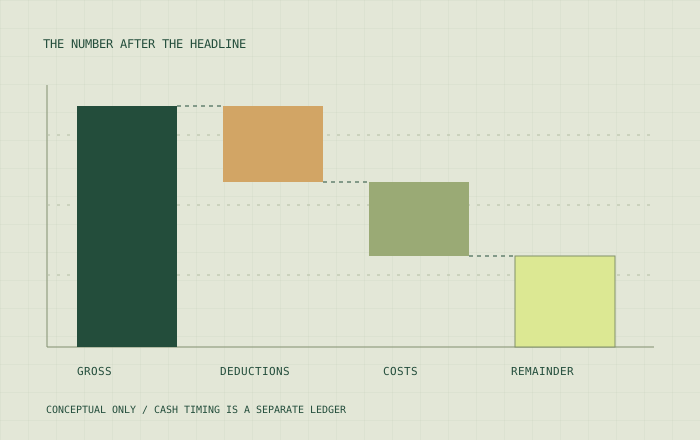
Decide the affected cohort before choosing the date
A price change is several decisions: the public price for new buyers, treatment of existing monthly members, treatment of annual members, timing at renewal, and the fate of discounts or complimentary access. Create a cohort for each distinct price, interval, currency, entitlement, and renewal rule. A blanket announcement without this map can promise one outcome while billing implements another.
Three defensible operating choices are to grandfather a cohort indefinitely, preserve its price for a defined transition, or move it at a stated renewal. The choice depends on economics, trust, technical capability, and the actual terms accepted by members. This is not legal advice. Review notice, consent, cancellation, tax, and renewal obligations for the jurisdictions and contracts in scope before executing a change.
Model revenue and exposure with a cohort ledger
List active members rather than multiplying one total by a new price. Hypothetical example: 140 monthly members pay $10, 60 annual members pay $96, and 25 founding members pay $6 monthly. A proposed public price is $12 monthly or $120 annual. If only new subscribers see it, current recurring billings do not change. If monthly standard members move at their next renewal while annual members move only at their later annual renewal and founders stay at $6, the cash effect arrives in stages.
For a simple monthly-equivalent planning view, the current cohorts total $2,030: $1,400 monthly, $480 from annual billings divided by twelve, and $150 founding. Moving only the 140 standard monthly members adds $280 per full renewal cycle before churn, failed payment, fees, tax, credits, or refunds. Do not call that $3,360 of realized annual revenue until renewals occur and cash is collected.
| Cohort | Current terms | Proposed handling | Cash timing |
|---|---|---|---|
| Standard monthly | 140 × $10 | $12 at next renewal | Across the next billing cycle |
| Standard annual | 60 × $96 yearly | $120 at each annual renewal | Staggered by renewal month |
| Founding monthly | 25 × $6 | Grandfather at $6 | No planned increase |
| New subscribers | No current billing | $12 monthly or $120 annual | From new purchase onward |
Amounts are hypothetical planning inputs in US dollars, not a forecast.
Preview billing behavior before touching live subscriptions
Stripe's current subscription documentation says price and quantity changes can create prorations, while its update endpoint provides controls for how those prorations are handled. Billing interval changes can also reset the billing date and trigger an immediate charge. A publisher should therefore preview a monthly renewal, annual renewal, discount, tax case, failed payment, refund, and currency case in a test environment before a bulk move.
Freeze the source cohort list and record the intended destination price identifier. Reconcile counts before and after the change. Keep an exception queue for members whose subscription state, discount, dispute, or payment failure makes the bulk rule unsafe. A provider's move tool is an execution mechanism; it does not decide which promise is fair or permitted.
Source notes: Update a subscription · The Subscription object
Write the member message from the ledger
Tell each cohort its current price, new price if any, effective renewal date, unchanged benefits, changed benefits, and how to manage or cancel. Explain the reason concretely without claiming the increase is unavoidable. Send the message early enough for the required review and action period, then provide a receipt or confirmation after the change. Support staff need the same cohort rules and a bounded exception policy.
After implementation, reconcile attempted renewals, successful cash, failed payments, cancellations, refunds, credits, and support volume by cohort. Compare actual contribution with the pre-change case only after the affected renewal window has passed. Keep grandfathered prices visible in the ledger so a later cleanup does not silently move them.
- Never use the public list price as a substitute for cohort billing data.
- Test prorations and billing-date changes before bulk execution.
- Give each member a specific effective date and action path.
- Measure collected cash and churn by cohort after the full renewal window.
Source notes: Update a subscription
Continue the work
Sources & limits
This is an editorial planning method, not legal, tax, or payment-provider advice. The example is hypothetical; applicable notices, consent, cancellation rights, and billing behavior require specific review.
- Update a subscription
Primary source · Publication date not stated · Primary source checked · 19 September 2026 - The Subscription object
Primary source · Publication date not stated · Primary source checked · 19 September 2026
Source claims and editorial judgments remain separate. Send a correction with the passage and supporting evidence.