
Open the visual model ↗
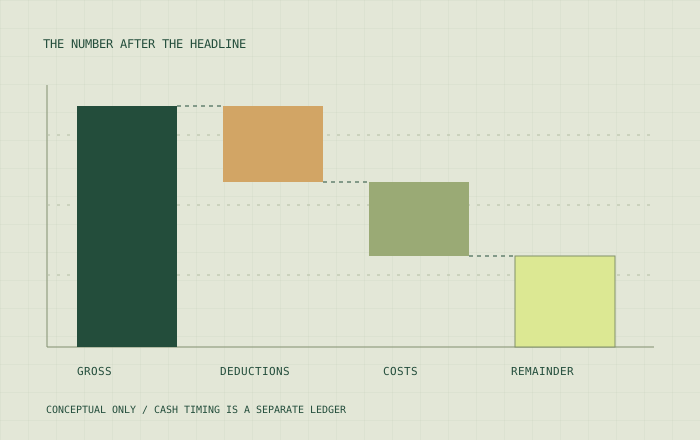
Name the obligation behind the cash
An annual payment improves today's bank balance while the promised service continues across the subscription period. That timing difference can finance useful work, but spending all of it immediately can create stress when delivery costs continue, members seek refunds under the publisher's policy, or renewals arrive below plan. Build an internal reserve schedule before treating annual cash as available.
Start with active subscriptions and paid service periods, not just deposits. Stripe's current objects illustrate the distinction: a subscription carries lifecycle and cancellation information, while invoice records include amounts and line periods. A publisher can use another system, but its ledger still needs member or cohort, paid amount, service start and end, refund status, and remaining delivery months.
- Keep gross cash, processor costs, refund reserve, and delivery reserve on separate lines.
- Release an internal service reserve on a stated cadence; do not silently spend it early.
- Run a downside case for refunds and weaker renewal before committing annual cash to fixed costs.
Build a simple reserve bridge
The following example is hypothetical and intentionally excludes tax and formal accounting treatment. One hundred twenty members pay $120 each, producing $14,400 of gross cash. The publisher assumes $720 of payment costs, sets aside $720 for refunds based on its own policy and experience, and reserves $7,200 for twelve months of planned service delivery. The residual planning amount is $5,760.
The delivery reserve releases internally at $600 per month because $7,200 ÷ 12 = $600. This is a management convention, not a claim about recognized revenue. If delivery is seasonal, use the actual cost calendar instead of a straight line. Record the assumptions beside the amount so a reserve is not mistaken for an externally required figure.
| Line | Calculation | Amount | Operating treatment |
|---|---|---|---|
| Gross annual cash | 120 × $120 | $14,400 | Deposit; not all discretionary |
| Assumed payment costs | Planning estimate | −$720 | Hold for actual costs |
| Refund reserve | Editorial assumption | −$720 | Review against experience and policy |
| Service delivery reserve | $600 × 12 months | −$7,200 | Release as planned service is delivered |
| Residual planning amount | $14,400 − $720 − $720 − $7,200 | $5,760 | Subject to other obligations |
Stress the reserve before hiring or spending
In a hypothetical refund shock, 15 members receive $120 refunds: $1,800. The $720 reserve covers only part of that amount, leaving a $1,080 shortfall. The publisher should decide in advance which flexible spending pauses, how service delivery remains protected, and what threshold triggers a reserve review. Do not assume the next cohort's sales will repair the gap.
Test at least three variables: active members, cash refund exposure, and monthly delivery cost. Also test a delayed renewal cycle because annual plans create a long quiet period between cash peaks. A rolling twelve-month view should show opening cash, new annual and monthly receipts, refunds, payment costs, delivery spend, other fixed costs, and closing cash. Label estimates and actuals distinctly.
| Case | Cash required for this case | Relevant planning envelope | Gap | Pre-agreed response |
|---|---|---|---|---|
| Base planning case | $600 | $720 | $120 headroom | Review reserve next cycle |
| 15 full refunds | $1,800 | $720 | $1,080 shortfall | Pause discretionary commitment |
| Delivery cost rises 20% | $8,640 annual | $7,200 | $1,440 shortfall | Resize plan or fund gap explicitly |
Reconcile reserve releases to real cohorts
Each month, reconcile opening reserve plus new allocations minus refunds and planned releases to the closing balance. Investigate canceled, refunded, disputed, extended, or complimentary accounts separately; they may have different remaining obligations. Cohorts matter because January annual members and September annual members do not finish service together.
Use the schedule in purchase decisions. A project funded from the $5,760 residual still needs its own contribution and cash test. If it creates a permanent monthly cost, model that cost beyond the current annual cohort. Finally, compare assumed payment costs, refunds, and delivery cost with actuals. Update future assumptions prospectively and preserve the old version so management can see whether a changed reserve reflects new evidence or simply a desire to spend more.
Continue the work
Sources & limits
This is an editorial operating reserve, not an accounting rule or advice about revenue recognition, tax, refunds, insolvency, or safeguarding customer funds. Use applicable contracts, law, and professional advice.
- The Subscription object
Primary source · Publication date not stated · Primary source checked · 19 September 2026 - The Invoice object
Primary source · Publication date not stated · Primary source checked · 19 September 2026
Source claims and editorial judgments remain separate. Send a correction with the passage and supporting evidence.