
The revenue mechanism
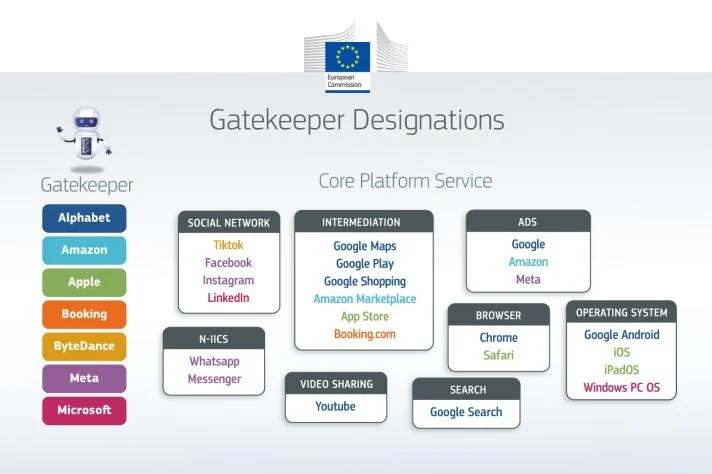
On 6 September 2023, the European Commission designated seven companies as 'gatekeepers' under the Digital Markets Act, the EU law that imposes interoperability and fairness obligations on the largest digital platforms. The Commission's own gatekeepers portal records that Alphabet was designated across eight separate core platform services, one of which is listed as Alphabet's online advertising service, tracked under case number DMA.100010. The underlying law, Regulation (EU) 2022/1925, defines 'online advertising services' as a core platform service category covering advertising networks, advertising exchanges and other advertising intermediation services offered by a company that also runs one of the law's other listed platform types, which is why the designation reaches Google's ad-buying and ad-selling tools specifically because Google also runs search, an operating system and other listed services.
What the documents show
The regulation sets a mechanical consequence for designation: under Article 3(10), a gatekeeper 'shall comply with the obligations laid down in Articles 5, 6 and 7 within 6 months after a core platform service has been listed in the designation decision'. Applied to the 6 September 2023 date the gatekeepers portal records, that provision points to a compliance obligation beginning within roughly six months of designation, a deadline set by the law rather than negotiated case by case. The gatekeepers portal is a living record, current as retrieved on 16 September 2026, and lists seven companies holding core platform service designations in total: Alphabet, Amazon, Apple, Booking, ByteDance, Meta and Microsoft, with Alphabet and Meta each holding multiple designated services.
The assumptions exposed
The designation assumes that a company meeting the law's user-count and revenue thresholds for one platform type, in Google's case search, Android, Chrome and other services, also runs its advertising business as part of the same gatekeeper obligations, because the statutory definition ties the advertising category to a company that provides other listed core platform services. That is a legal classification, not a finding that Google's advertising business engaged in any specific anticompetitive act; the DMA imposes forward-looking obligations rather than penalising past conduct the way an antitrust ruling does. A reader should also not assume the six-month compliance clock itself produces an audited compliance outcome by that date; it sets a legal deadline, and separate Commission enforcement action addresses whether a gatekeeper actually met it.
What to check before you rely on it
A publisher operating in the EU and relying on Google's advertising tools should track the gatekeepers portal directly rather than a news summary, since designations and the obligations attached to them are periodically updated. This is an editorial checklist, not legal advice.
- Which specific core platform service designation applies to the Google product I use, and is it still listed as active?
- Has the Commission published a compliance or non-compliance finding for that service since designation?
- Am I distinguishing a DMA obligation, which is forward-looking, from an antitrust finding about past conduct?
The designation is a documented legal fact with a documented statutory deadline attached; what Google actually changed in its advertising products as a result is a separate, ongoing record to check directly.
Sources & reading trail
The Commission's own record of the seven gatekeepers designated 6 September 2023, including Alphabet's online advertising service as case DMA.100010.
Source published: Not established · Retrieved: 16 September 2026
The regulation's own text defining online advertising services as a core platform service category and setting a six-month post-designation compliance deadline.
Source published: 14 September 2022 · Retrieved: 16 September 2026
Programme terms, standards and reports establish the entry; the assumptions reading is Publisher Revenue Guide editorial analysis. This retrospective draft does not imply the site published on the event date.