The revenue mechanism
Newsletter platforms like beehiiv sell publishers on infrastructure they do not have to build themselves, and deliverability is the part of that infrastructure a publisher can least easily verify from the outside. Beehiiv's own support article on DMARC setup draws a specific line: for a publication still sending from a free beehiiv-provided subdomain, the company states it manages SPF, DKIM and DMARC entirely on the publisher's behalf. Once a publisher moves to a custom domain, that automatic coverage narrows, and the publisher becomes responsible for finishing part of the authentication setup themselves, as described in beehiiv's own current documentation.
What the documents show
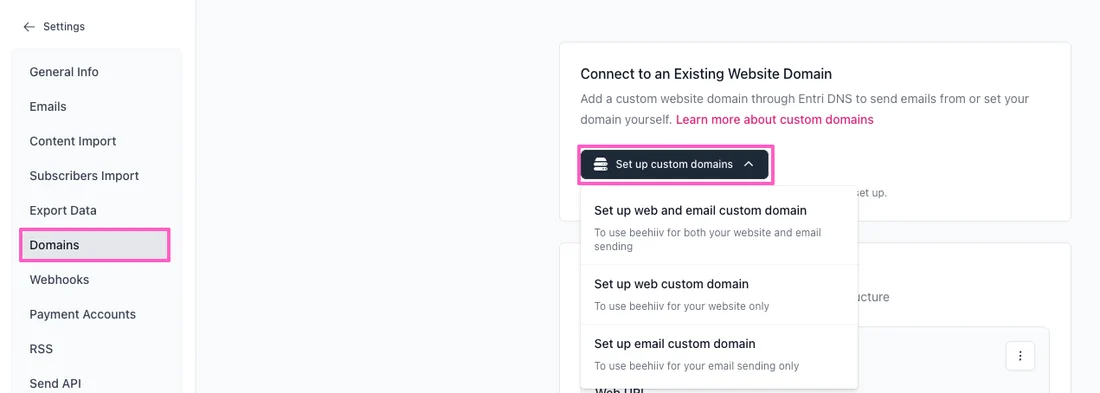
For a custom sending domain, beehiiv's custom domain article states the platform generates a set of DNS records, described in the article as 12 records, for the publisher to add at their domain registrar, and that an integrated Entri setup option can retrieve and configure those records automatically when a publisher connects the right account. DMARC is handled separately: the DMARC article states beehiiv provides a wizard that generates the correct record values, but the publisher must still create the DNS entry at their own provider, and the article states that, as of February 2024, every beehiiv account using a custom domain is required to have a valid DMARC record configured. The article recommends third-party monitoring services by name for reading the reports a DMARC record generates, rather than offering that monitoring inside beehiiv itself.
The assumptions exposed
A publisher who reads a general claim that beehiiv handles deliverability as a blanket statement is over-reading documentation that draws a clear boundary at the point a custom domain is introduced. The February 2024 deadline beehiiv cites tracks the same Gmail and Yahoo bulk-sender requirements described elsewhere in this desk, which means beehiiv's own requirement is downstream of, not independent from, the mailbox providers' rules. Beehiiv's documentation does not publish its own aggregate inbox-placement or spam-rate figures for customers to check against, so a publisher relying solely on the platform's dashboard has less visibility than the DMARC reporting a completed setup would actually generate.
What to check before you rely on it
This is an editorial checklist built from beehiiv's own stated division of responsibility. A publisher on a custom domain should confirm the DMARC record was actually added at the registrar, not only generated by the wizard, and should set up independent monitoring of the reports that record produces.
- Is the publication still sending from a beehiiv subdomain, or has it moved to a custom domain that shifts setup responsibility?
- Has the DMARC TXT record been verified as live, not just generated?
- Is anyone reading the DMARC reports, given beehiiv does not surface that monitoring itself?
The platform's own documentation is a reliable map of who is responsible for what; it is not a claim about how any specific newsletter's mail is actually being placed.
Sources & reading trail
States what beehiiv manages automatically for subdomains versus custom domains, and the February 2024 requirement for a valid DMARC record.
Source published: Not established · Retrieved: 16 September 2026
States the DNS record generation and Entri auto-configuration process for a custom sending domain.
Source published: Not established · Retrieved: 16 September 2026
Programme terms, standards and reports establish the entry; the assumptions reading is Publisher Revenue Guide editorial analysis. This retrospective draft does not imply the site published on the event date.